
When to refresh your brand (and how to do it without starting from scratch)

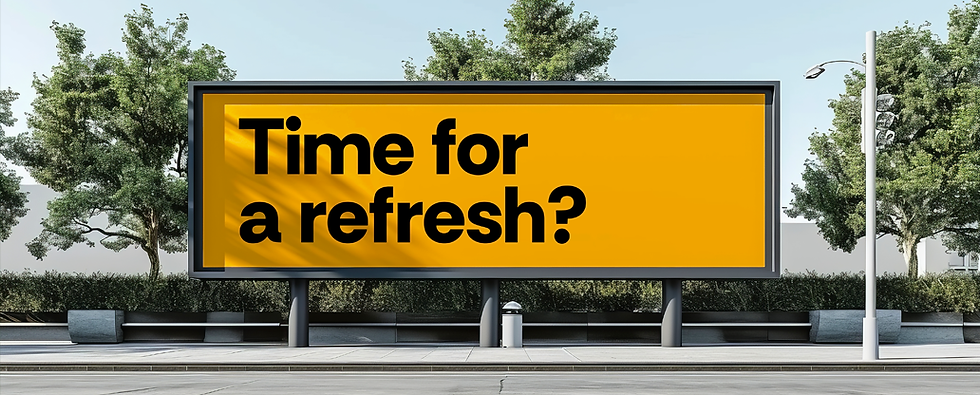
A brand refresh comes up for most businesses at some point. Things shift. Your offer evolves, your clients change, or you simply outgrow how you presented yourself two or three years ago. The question is never really whether to evolve, it's knowing when the time is right and what actually needs to change.
Start by asking what's driving the feeling
The urge to refresh often comes from a vague sense that something is off. Before you act on that, it's worth getting specific. Is your messaging no longer reflecting the level you're working at? Are you attracting the wrong kind of enquiries? Does your visual identity feel out of step with how you show up in other ways?
These are genuine signals worth paying attention to. But it's also worth knowing what isn't a signal. Feeling a bit bored of your own brand is one of the most common reasons people change things they shouldn't. You see your brand every day. Your clients don't. What feels stale to you might be exactly what makes you recognisable to them. Before you start pulling things apart, make sure you're solving a real problem rather than a restless one.
Know the mistakes worth avoiding
The most common mistake is refreshing everything at once. It's disruptive, expensive and often unnecessary. A full rebrand is rarely what's actually needed, and businesses that go down that route often find themselves six months later with a shiny new look but the same underlying issues.
The second mistake is making changes based on personal taste rather than what's actually not working. Your brand isn't for you, it's for the people you're trying to reach. If you're drawn to a completely different aesthetic, that's worth sitting with before acting on. Ask whether the change would genuinely serve your audience or whether it's more about how you want to feel about your business.
The third, and perhaps the most costly, is treating a brand problem as a visual problem. If your positioning is unclear, if people don't quite understand what you do or who it's for, if your messaging isn't landing, a new colour palette won't fix any of that. Visual changes are often the most visible and therefore the most tempting place to start, but they're rarely where the real work needs to happen. Getting clear on what the actual problem is before deciding how to solve it saves a lot of time and money.
Evolving is not the same as reinventing
A good refresh is usually more focused than people expect. It might mean sharpening your positioning, updating how you describe your services, or bringing your visual identity into line with where you are now. It might mean retiring language that no longer fits or updating imagery that felt right a few years ago but doesn't reflect the business today.
The businesses that handle this well tend to change the things that are holding them back while being quite deliberate about protecting the things that aren't. They ask what's working before they ask what needs to change. They treat consistency as an asset rather than something to move on from.
Strong brands are built on consistency. Not rigidity, but a recognisable point of view that shows up reliably across everything. The goal of a refresh isn't to become something new. It's to make sure how you present yourself still accurately reflects what you do and who you do it for, so the right people can find you, understand you and trust you.
So where do you start?
If you're sitting with a feeling that your brand needs attention, the most useful thing you can do is get specific before you do anything else. Write down what's actually not working and why. Look at where the misalignment is. Is it in how you're describing your work? In who's enquiring? In how your visuals compare to others at your level?
From there, you'll have a much clearer picture of whether you need a small refinement, a more focused refresh, or something deeper. And you'll be making that decision based on something real rather than a general sense of unease.
That's always a better place to start.


